
What Does a Flange Yoke Connect
You never see it, but a hidden workhorse performs a high-speed dance beneath your vehicle every time you accelerate.
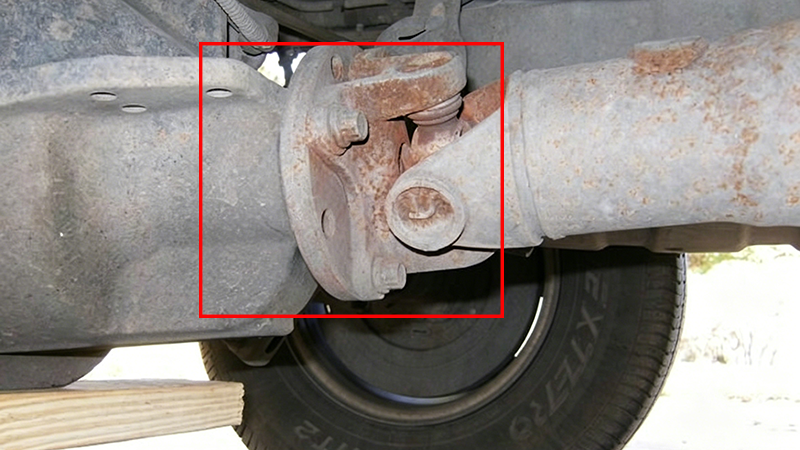
When examining what a flange yoke connects, picture a relay race passing power down your drivetrain—the sequence of parts spinning your tires.
In practice, this simple metal bridge serves as the crucial handoff point, safely translating engine rotation into the forward motion you feel.
The Handshake: How the Transmission Connects to the Driveshaft
Every time you accelerate, twisting engine power—called torque transmission—travels down a spinning rod known as an output shaft.
To pass this intense force onward safely, engineers rely on a flat, circular metal plate.
Securing the transfer case output shaft connection works like bolting a heavy ceiling fan blade to its motor.
Instead of using a weak clip, bolting two flat metal faces together creates massive stability at highway speeds.
At the rear wheels, a similar sturdy handshake occurs.
The system bolts directly to the rear differential pinion flange attachment, which is the mounting face on the gearbox between your tires.
This tight flange yoke connection keeps power flowing smoothly without rattling.
Because cars constantly bounce over road bumps, rigid plates alone aren’t enough.
The system requires a flexible mechanism to handle the suspension’s constant up-and-down movement.
The Cradling Claw: How the U-Joint Allows Flexible Movement
Hitting a pothole constantly changes the driveline angles between your engine and tires. If your driveshaft were a solid pipe, that sudden bend would snap the metal instantly.
Instead, the system relies on a “yoke”—a two-pronged claw holding a cross-shaped Universal Joint (U-joint).
This partnership creates the driveline universal joint assembly, acting like a mechanical wrist so the shaft can bend (articulate) while still spinning smoothly.
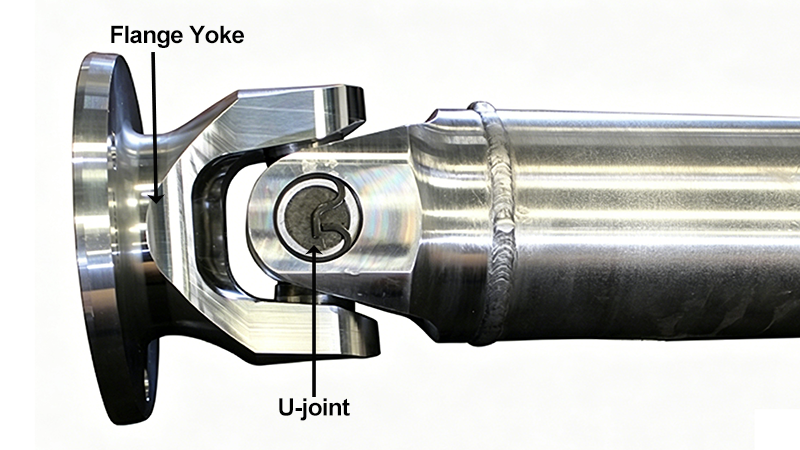
To survive these extreme twisting forces, manufacturers utilize heavy-duty, precision machined forged steel yokes.
This distinctive claw design exists for three specific reasons:
- To hold the U-joint
- To allow pivot movement
- To balance the spinning weight
Determining exactly what size u-joint for flange yoke connections you need is critical, because a loose fit causes aggressive vibrations and accelerated wear.
Flange Yoke vs Slip Yoke: Key Differences Explained
| Type | Connection | Movement | Use | Advantage |
|---|---|---|---|---|
| Flange Yoke | Bolt fixed | No sliding | Trucks, heavy-duty drivetrains | High torque stability |
| Slip Yoke | Spline connection | Axial sliding | Light vehicles with suspension travel | Length flexibility |
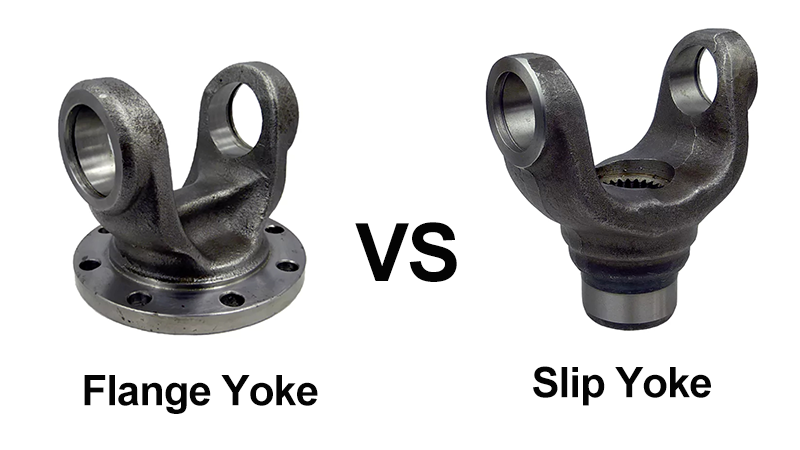
Flange yokes are commonly used in heavy-duty drivetrains where strength and stability are more important than movement flexibility.
Slip yokes are better suited for systems that require shaft length adjustment during suspension movement.
Spotting Trouble: Signs Your Flange Yoke Is Failing
Ignoring a strange clunk under your seat turns normal wear into a safety hazard.
As these heavy metal parts loosen, they trigger aggressive rotational vibration, causing noticeable driveshaft vibration from worn yoke connections at highway speeds.
If a mechanic replaces it, they must know how to measure flange yoke bolt pattern geometry, recognizing the structural differences between a round flange vs rectangular flange yoke to ensure a tight, secure fit.
Catching these warning signs early is essential for preventing major driveline damage and ensuring a safe ride.
Maintaining Your Drive: How to Keep a Flange Yoke in Good Condition
By expertly managing automotive drivetrain torque transmission, flange yoke actively makes your daily drive smooth.
Are you experiencing weird vibrations?Chalk it up to a mechanical incompatibility in your driveline and assert to your mechanic that he needs to check the driveline.
A simple proactive maintenance job to replace damaged companion flange bolts ensures this work of art—vital mechanical bridge in your vehicle—safely keeps your wheels turning.