
Signs It’s Time to Replace Your Center Support Bearing
You’re driving when a rhythmic thump beneath the center console suddenly rattles your seat. According to mechanic data, ignoring this vibration means missing early center support bearing replacement signs.
This is what a typical center support bearing looks like installed on a vehicle.
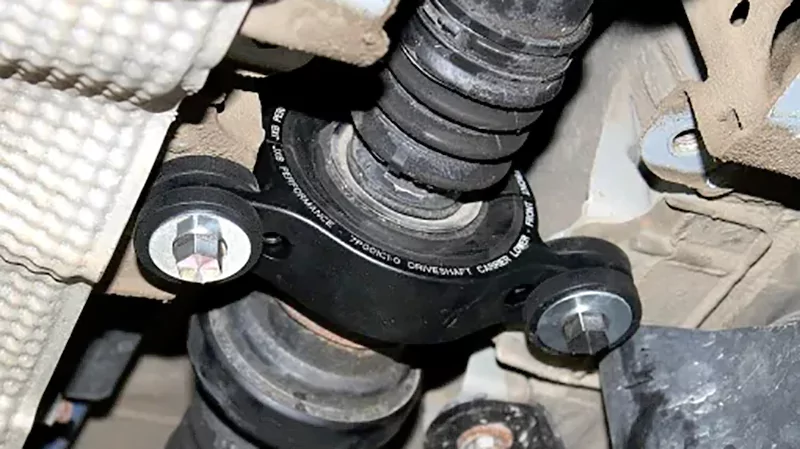
Think of this bearing as a swing set hanger stabilizing heavy two-piece driveshaft assembly components. Spotting early signs of a failing center support bearing prevents structural failures and saves thousands.
Identifying Warning Signs: Drivetrain Vibration and Low-Speed Shudder
A sudden shake felt through the seat is often the first sign something is wrong in the driveline. Unlike tire imbalance—which usually shows up as a steady steering wheel vibration at highway speeds—a failing center support bearing tends to cause a stronger vibration during acceleration, often felt right under the center console.
In most cases, this happens when the rubber support around the bearing deteriorates or collapses over time. Once the rubber loses its ability to absorb movement, the driveshaft is no longer properly isolated. The result is a noticeable harmonic vibration that feels similar to an unbalanced washing machine during its spin cycle.
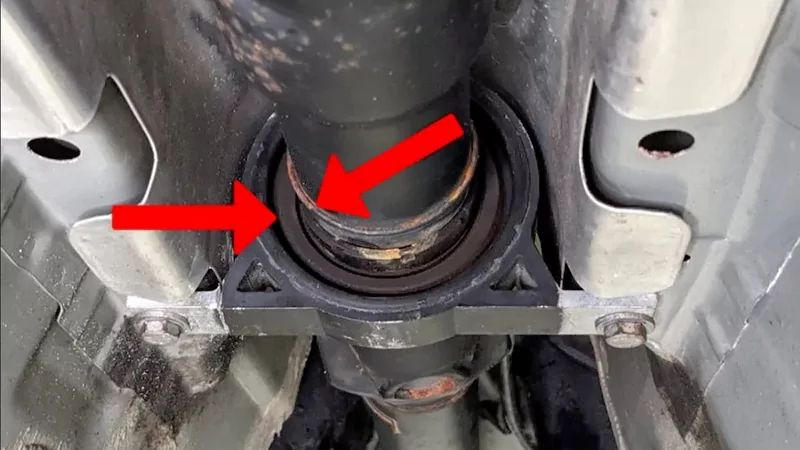
To spot signs of carrier bearing rubber failure, watch for:
- A shuddering during low-speed takeoff.
- Shaking that stops when releasing the gas.
- Rhythmic thumping under your seat.
Diagnosing a worn carrier bearing vs unbalanced driveshaft comes down to tracking these specific shudders. If ignored, those wobbling metal parts eventually grind together and risk snapping entirely. These physical shivers are soon followed by audible warnings that demand immediate attention.
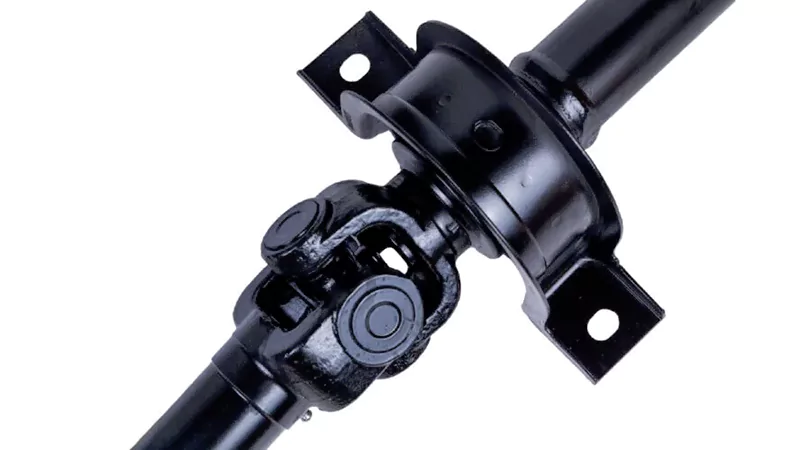
To better understand why these symptoms happen, here’s how the drivetrain system is structured.
Squealing and Clunks: Sensory Red Flags You Can't Ignore
Hearing a high-pitched squealing from under vehicle floors is a clear cry for help. Inside the support bracket are tiny steel balls that let the heavy shaft spin. When their grease dries up, you experience intense bearing friction. It sounds just like a squeaky door hinge spinning at highway speeds.
Eventually, that tight metal assembly loosens, creating dangerous rotational play. These symptoms of a failing hanger bearing fall into distinct camps:
- The Squeal: A whine that climbs in pitch as you accelerate, signaling dry metal-on-metal rubbing.
- The Clunk: A sharp clunking sound when shifting gears (like moving from Park to Drive), proving the shaft is slamming against its housing. Overlapping symptoms of worn universal joints might also add a metallic click.
Ignoring these loud warnings is a guaranteed way to multiply your repair bills. Before those harsh impacts shatter the mount, performing a simple driveway test can prevent severe secondary damage to your transmission.
The Driveway Test and the Danger of Delay: Protecting Your Transmission
You no longer have to guess what that thumping sound means. Safely testing driveshaft play by hand while parked confirms your suspicions. Checking driveshaft carrier bearing play—simply giving the cold, stationary shaft a firm tug to feel for excessive wiggle—empowers you to confidently explain the issue to a mechanic.
Ignoring this wobble is dangerous. A failing carrier bearing can absolutely damage the transmission; violent shaking quickly ruins expensive output seals. While average driveshaft center support bearing replacement cost runs between $200 and $500, catching it early prevents catastrophic secondary repairs. Address the vibration today to protect your vehicle.