
Yoke Shaft vs Weld Yoke: What's the Difference and Which One Do You Need?
Introduction
Transferring massive amounts of horsepower and torque from your engine to your wheels requires a driveline that operates in perfect harmony. Every universal joint, shaft and yoke has a vital part to play in keeping your vehicle moving in perfect form. Whether you are building a custom off-roading rig, restoring a muscle car, rebuilding an old muscle car and/or swapping out worn-out factory parts, knowing your driveline components is an absolute non-negotiable.
One of the most common sticking points for mechanics and automotive enthusiasts is learning about the different roles that different types of yokes have. If you’re asking yourself something like, “Yoke Shaft vs Weld Yoke, what’s the difference between these and which one do I need?”, then you’ve come to the right place. Let’s break down the function, difference and specific situations for both of these important driveline parts: yoke shafts vs weld yokes.
Table of Contents
What is a Yoke Shaft?
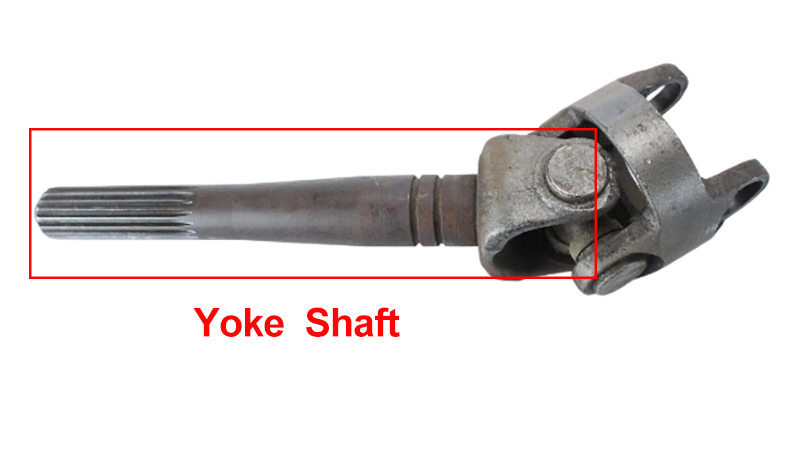
A yoke shaft is a vital connection point in your drivetrain. Most commonly recognized as part of a driveshaft slip yoke assembly, a yoke shaft features a splined internal or external shaft attached to a U-joint housing. Its primary job is to connect the transmission output shaft (or transfer case) to the rest of the driveshaft.
Because cars have a suspension system that raises and lowers, the distance between the transmission and rear axle varies all the time as you drive. A yoke shaft lets the driveshaft slide in and out of the transmission tail housing in a safe way as the suspension system raises and lowers.
When a builder builds a drivetrain, they sometimes have to decide whether a slip yoke or a bolt-on yoke has the advantages and disadvantages of that situation. A slip yoke allows the drivetrain to accommodate suspension travel by sliding along the output shaft. A bolt-on yoke is firmly fixed to the output shaft and usually works with a separate slip spline built into the driveshaft.
What is a Weld Yoke?
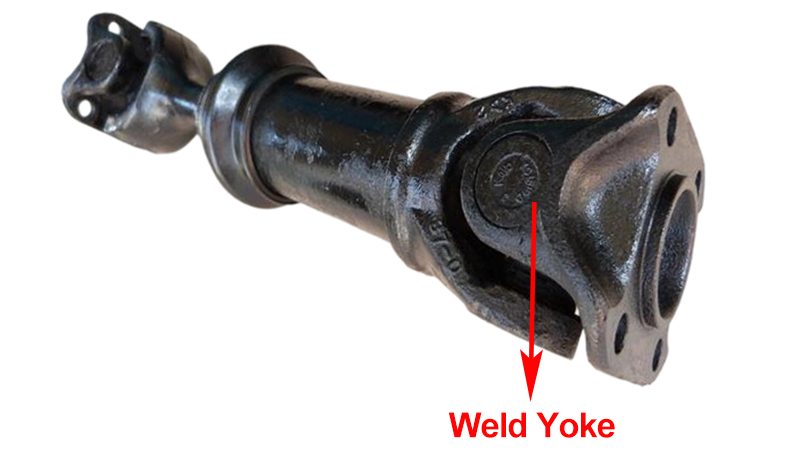
A weld yoke (also known as a tube yoke) serves a completely different structural purpose. Instead of sliding onto a splined shaft, a weld yoke is machined with a specific diameter designed to press snugly into the hollow end of your driveshaft tubing. Once pressed in, it is permanently welded into place.
These parts create the solid mounting ears that house the universal joint at either end of the driveshaft tube. Without weld yokes, the driveshaft tube would not have a connection point for the U-joint assembly.
Installing a weld yoke requires precision machining and welding. After welding, the entire driveshaft must be balanced to ensure smooth operation at high speeds.
Yoke Shaft vs Weld Yoke: Key Differences
| Feature | Yoke Shaft | Weld Yoke |
|---|---|---|
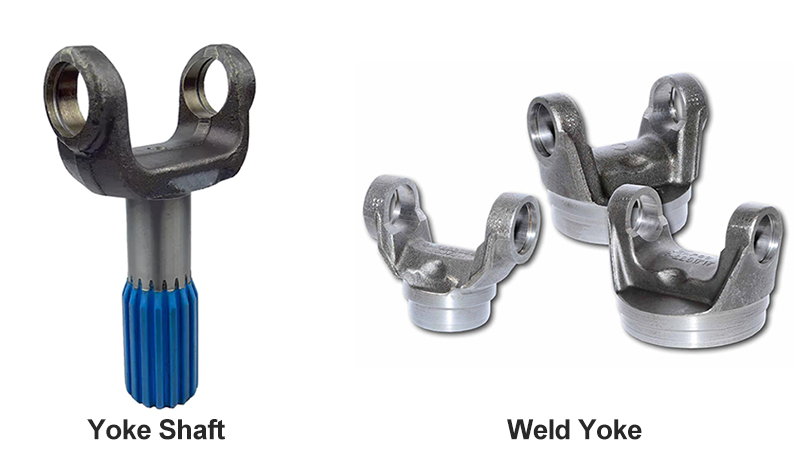
| Function | Connects transmission to driveshaft | Connects driveshaft tube to U-joint |
| Attachment | Splined connection | Welded connection |
| Location | Transmission or transfer case end | Driveshaft tube end |
| Movement | Allows axial movement | Fixed position |
| Serviceability | Replaceable | Usually replaced with tube repair |
Function
A yoke shaft connects the transmission to the driveshaft and manages axial movement caused by suspension travel.
A weld yoke provides a permanent mounting point for the universal joint on the driveshaft tube.
Attachment
Yoke shafts use splines to connect with the transmission output shaft.
Weld yokes are permanently attached through welding.
Location
Yoke shafts are typically found at the transmission or transfer case.
Weld yokes are located at the ends of the driveshaft tube.
Driveline Component Selection Guide
Material Selection
When upgrading an engine, your driveline components should be evaluated as well.
- Standard steel yokes are suitable for daily driving.
- Chromoly yokes are recommended for racing, off-road, and high-torque applications.
Measuring and Fitment
Before ordering a replacement yoke, verify:
- U-joint cup diameter
- Yoke width
- Tube diameter
- Tube wall thickness
- Spline count
A mismatch can prevent proper installation and may lead to driveline issues.
Universal Joint Sizing
Common U-joint series include:
- 1310 Series
- 1350 Series
- 1410 Series
Higher horsepower applications generally require larger U-joint series.
When Should You Choose Which?
Choose a Weld Yoke When:
- Building a new driveshaft
- Repairing a damaged driveshaft tube
- Shortening or lengthening a driveshaft
Choose a Yoke Shaft When:
- Replacing a worn slip yoke
- Changing transmission spline counts
- Repairing spline wear
- Upgrading driveline components
Best Practices for Installation and Maintenance
Proper Driveline Phasing
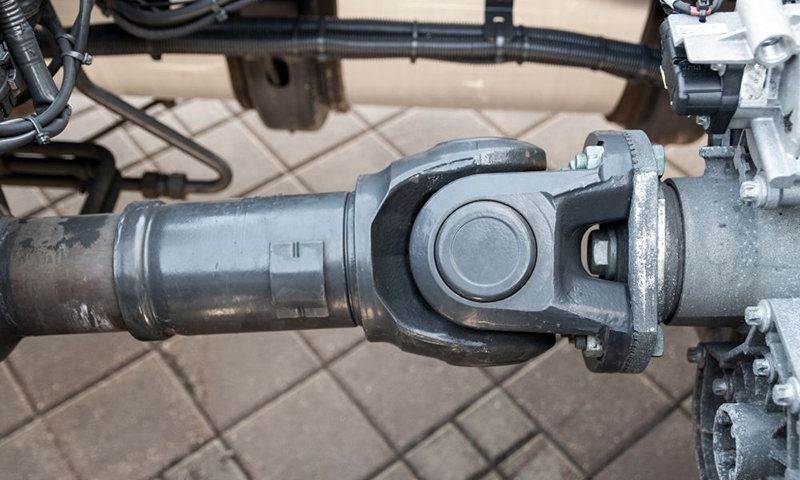
Driveline phasing is critical to smooth operation.
The yoke ears at both ends of the driveshaft should remain aligned. Incorrect phasing can cause vibration, noise, and premature U-joint wear.
Fixing Driveshaft Vibration Issues
Common causes of driveline vibration include:
- Incorrect phasing
- Poor balance
- Worn U-joints
- Incorrect pinion angle
- Damaged yokes
Always verify operating angles and balance after driveshaft repairs.
The Final Takeaway
Understanding the difference between a yoke shaft and a weld yoke helps ensure that the correct replacement part is selected for your driveline.
A yoke shaft provides the flexibility needed to accommodate suspension movement, while a weld yoke creates a strong and permanent connection between the driveshaft tube and the universal joint.
Before ordering components, always verify spline count, U-joint series, and critical dimensions. Proper identification and measurement can prevent installation problems and improve long-term driveline reliability.