Driveshaft U-Joint vs Steering U-Joint: What's the Difference?
In real repair shops and parts sourcing work, it’s very common to confuse a driveshaft U-joint with a steering U-joint.
They look similar on the surface and even share the same basic mechanical principle. But once installed in the wrong system, the difference shows up quickly—either as driveline vibration or steering feedback issues.
Most of the mistakes don’t come from misunderstanding the theory. They come from visual similarity.
Driveshaft U-Joint: How It Works in Real Conditions
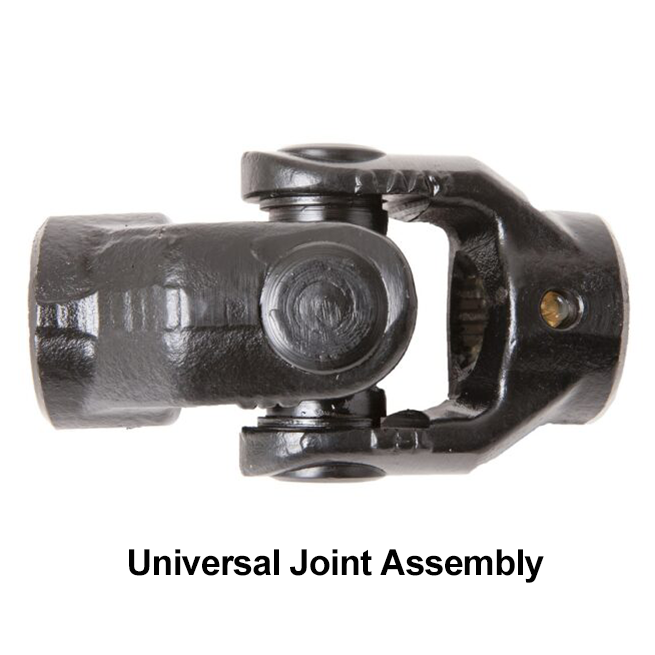
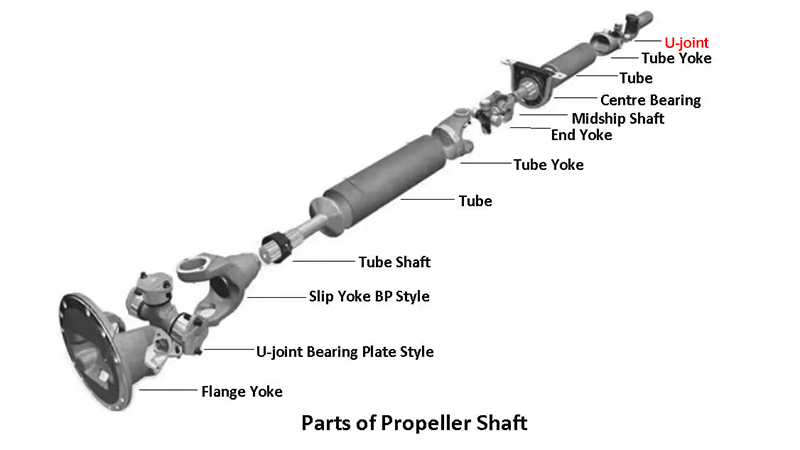
A driveshaft U-joint is part of the drivetrain system. It connects rotating shafts and allows torque to be transmitted even when the shaft angle changes during vehicle movement.
In real operation, especially on trucks, agricultural machines, and construction equipment, this component is under constant load. It rotates continuously while dealing with vibration, suspension travel, and torque changes at the same time.
In workshop experience, driveshaft U-joint wear is often not noticed until vibration becomes obvious at certain speeds.
Typical field observations include:
- Small play that is hard to detect visually
- Grease leakage from seals
- Vibration that increases with speed
This is why technicians rarely judge it only by appearance.
Steering U-Joint: Small Movement but High Sensitivity
The steering U-joint works in a completely different system.
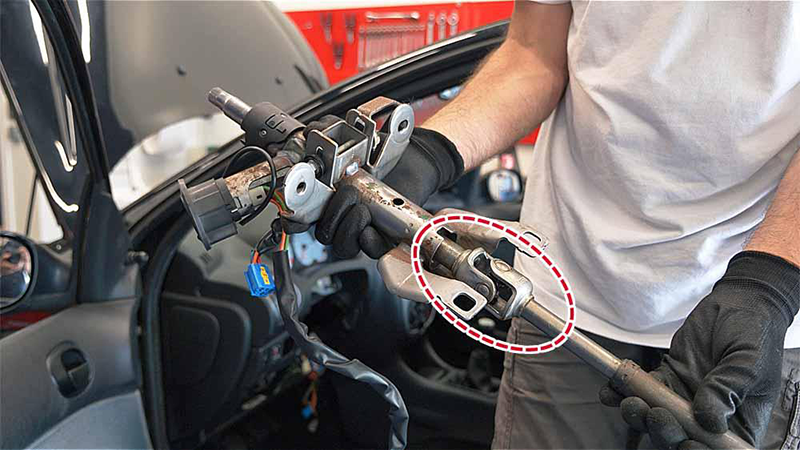
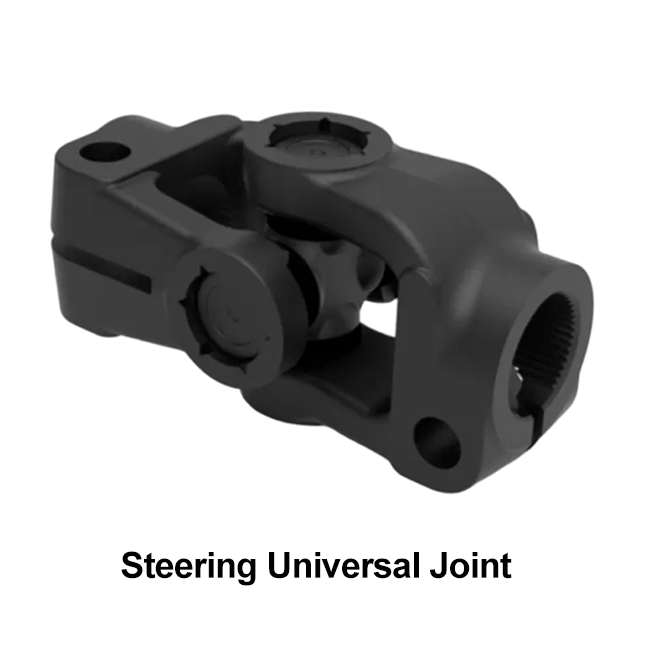
It is part of the steering shaft, connecting the steering wheel to the steering gear or steering rack. In many vehicle designs, it is used to offset alignment differences because the steering column cannot always be installed in a straight line.
Unlike drivetrain components, it does not carry engine torque. Instead, it focuses on transmitting steering input smoothly and accurately.
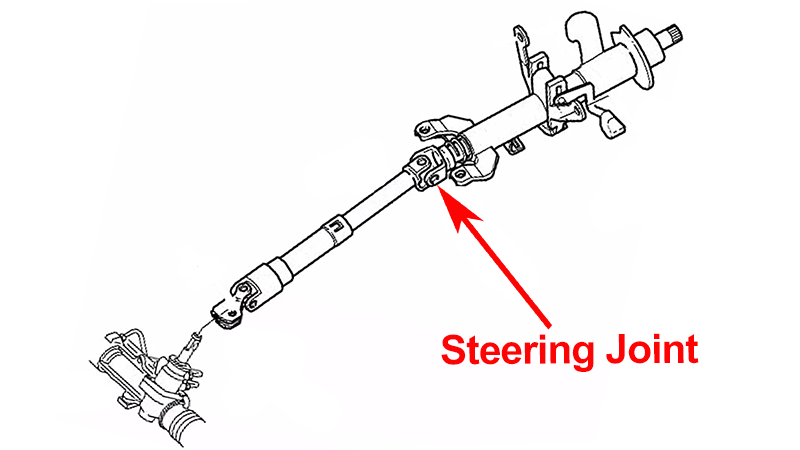
In real driving feedback, steering U-joint issues are usually easy to notice:
Steering feels tight or slightly heavy
Return-to-center becomes uneven
Small binding or clicking sensation during turns
Even slight wear can affect driving comfort directly.
Driveshaft U-Joint vs Steering U-Joint: Practical Comparison
In real maintenance work, technicians usually don’t compare these parts by definition. They compare how they behave in actual operation.
| Aspect | Driveshaft U-Joint | Steering U-Joint |
|---|---|---|
| Installed system | Drivetrain (propeller shaft line) | Steering shaft system |
| Main role | Transfers engine torque to axle | Transfers steering input from wheel |
| Working condition | Continuous rotation under load | Limited angular steering movement |
| Load type | High torque + vibration + speed | Low torque, focus on precision |
| Typical failure symptom | Vehicle vibration, knocking noise | Tight steering, uneven feel |
| Sensitivity in driving | Often noticed at higher speed | Immediately felt during steering |
| Replacement trigger | Wear, play, grease leakage | Steering stiffness or feedback change |
In practice, this table reflects how technicians actually diagnose problems: not by theory, but by system position and failure behavior.
Why These Two Are Often Mixed Up
The confusion usually happens because the parts look similar when placed side by side.
But their operating environments are completely different:
- One works under drivetrain torque and continuous rotation
- The other works under steering control with limited movement
- One failure shows up as vibration
- The other shows up as steering feel changes
This is why incorrect substitution often leads to complaints shortly after installation.
Common Mistakes in Replacement Work
In parts sourcing or maintenance, one typical issue is matching by size or appearance only.
A sample may “fit” physically, but still fail in operation because it is used in the wrong system.
This usually happens when the distinction between drivetrain and steering applications is not checked carefully.
From field experience, this is one of the most avoidable but still frequent sourcing mistakes.
Final Note from Real-World Experience
In actual repair work, the problem is rarely that people don’t understand how a U-joint works.
The real issue is assuming that similar-looking parts can be used interchangeably.
Once you have seen enough vibration cases in driveline systems and steering feedback issues in steering systems, the difference becomes obvious and no longer confusing.