
How to Select the Right Splined Stub Shaft for Automotive Applications
I’ve seen more driveline comebacks caused by a mismatched stub shaft than by almost any other small part. It looks simple—a short shaft with teeth—but if the spline fit, heat treat, or shoulder dimensions are off, you get vibration, leaking seals, or a joint that quits early.
For distributors and buyers sourcing an Automotive Stub Shaft, the job is not to find the cheapest part that “looks right.” It’s to find the one that fits the mating interface and survives the duty cycle. Here’s how I’d narrow it down.
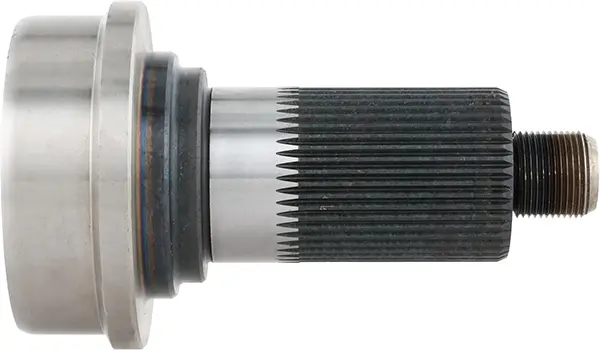
1. Confirm the Application and Compatibility Requirements
Begin with the assembly, not the catalog. A front halfshaft stub shaft will see different angles, loads and contamination than a rear differential or PTO stub shaft. I want to know the exact position, the coupling or gear, and if the shaft is at a fixed angle or if it pivots all the time. Also check the service environment—road spray and salt kill seal journals fast.
Part-number cross-referencing is useful, but it is not proof. I’ve seen “equivalent” shafts differ by one spline tooth or a shoulder radius. Confirm the physical interface: spline count, pilot diameter, retaining method, and overall length.
If the supplier can’t show a drawing, I treat it as a guess.
2. Check Spline Specifications and Dimensions
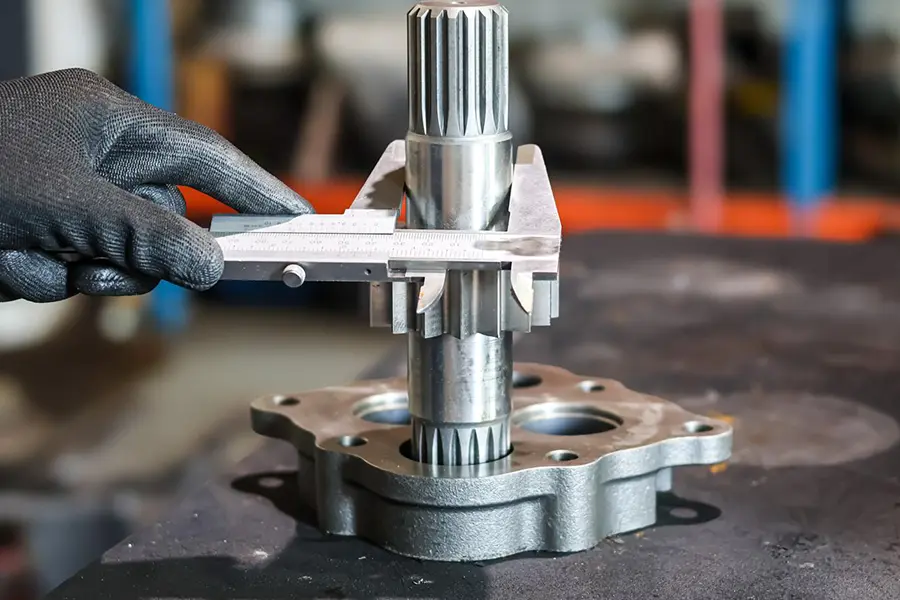
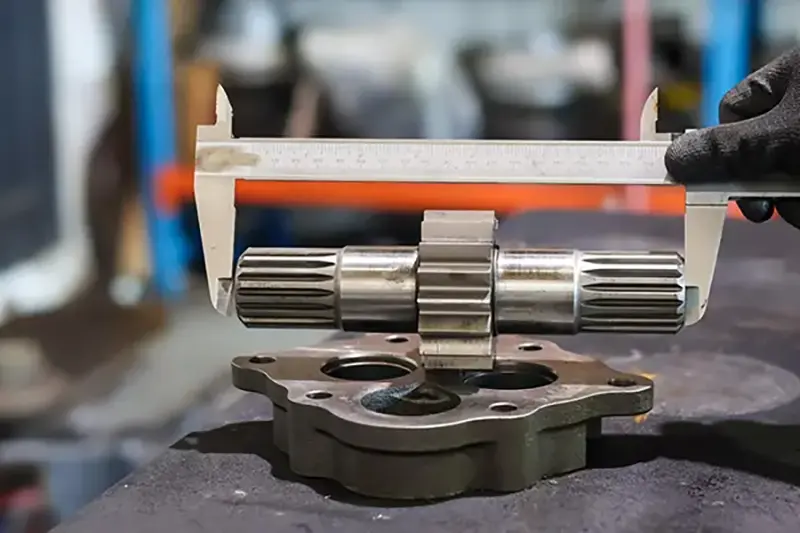
This is where purchase orders go wrong. Get the Splined Stub Shaft Dimensions in writing and check them against the mating hub—not just the nominal size. For Splined Shaft Specifications, I want to see:
Spline type: involute, parallel key, or serrated
Tooth count and module/pitch
Major and minor diameters
Effective engagement length, not just total spline length
Runout and concentricity tolerances
End detail: thread, snap-ring groove, or plain
Pay attention to effective engagement. A shaft can have plenty of spline length but too little actual contact, which concentrates load and wears the teeth. Ask for tolerances, not just nominal dimensions. If the print says “OEM equivalent,” make them prove it against the OEM print.
3. Choose the Right Material and Manufacturing Quality
Splined Shaft Material selection drives strength, wear life, and cost. Common choices include:
Medium-carbon steel (e.g., 1045) – good general strength, suitable for moderate loads
Alloy steel (e.g., 4140/42CrMo) – higher strength and hardenability for demanding driveline applications
Case-hardened or induction-hardened grades – improved spline wear resistance
Besides the grade of steel, ask how the splines are made. Rolling, hobbing and broaching all leave different surface characteristics. Post processing matters. Chamfering, heat treatment, surface finish all affect fit and fatigue life.
A supplier who can explain his process controls, hardness testing, dimensional inspection and traceability is usually a safer partner than one who quotes on price alone.
4. Take Torque Loads and Operating Conditions into Account
Stub Shaft Torque Capacity should be matched to the actual load profile, not just engine peak torque. Consider shock loads from clutch drops, rough-road impacts and duty cycle. A commuter car and a commercial van don’t ask the same thing of the same looking shaft.
Request high torque or high cycle programs torque test data or calculation notes. If it’s a performance or heavy-duty application, don’t assume a standard catalog part has margin.
Check corrosion protection if the shaft sees winter salt. Just make sure the spline geometry and heat treat were validated for that load.
5. Verify Connection and Installation Dimensions
A shaft that fits the spline but not the surrounding assembly is still incorrect. Check overall length, pilot diameter, bearing journal, snap-ring groove location, thread size and pitch.
Check installation orientation – some stub shafts are directional and a backward installation can damage the seal or joint.
Also need seal journal hardness & finish checked. That is a common source of a leak that gets blamed on the seal. If a retaining ring is used on the shaft, check the groove width and location. A few thousandths out can cause a loose joint or a fight during installation.
6. Work with a Reliable Splined Stub Shaft Supplier
A good design will only become a reliable part if the supplier is capable of it. I’d like documented dimensional and material specifications for an OEM Splined Stub Shaft program, including in-house machining and heat treatment or qualified subcontractors and traceability.
Packaging and labeling are key to aftermarket distribution. Most buyers won’t say it, but mispicks lead to returns.
If a catalog part won’t work, ask about Custom Splined Shaft capability. Changing spline count, length, or end configuration is common, but the supplier should issue updated drawings and provide samples before production.
A trading company with no drawing control is not a supplier I’d put on a driveline program.
Conclusion
Regarding Choosing a Splined Stub Shaft, it’s not a matter of lowest price match. You want to match the interface, material and load and then confirm the supplier can hold those specifications.
Get the drawing.
Check effective spline engagement.
Verify heat treat.
Sample fit before volume.
Do that, and you eliminate most of the vibration and leak complaints that start with a part nobody ever gave a second thought to.