
How to Choose the Right Slip Yoke for Your Driveshaft
A slip yoke is one of those parts you don’t think about until it’s wrong. And when it’s wrong, you know immediately—vibration, a leak you can’t trace, or a clunk every time you let off the throttle. The frustrating part? Many slip yoke problems can be traced to fitment mistakes, worn components, or improper installation. These issues can often be prevented by checking the key dimensions before the part is ever ordered.
Here’s how to get it right the first time.
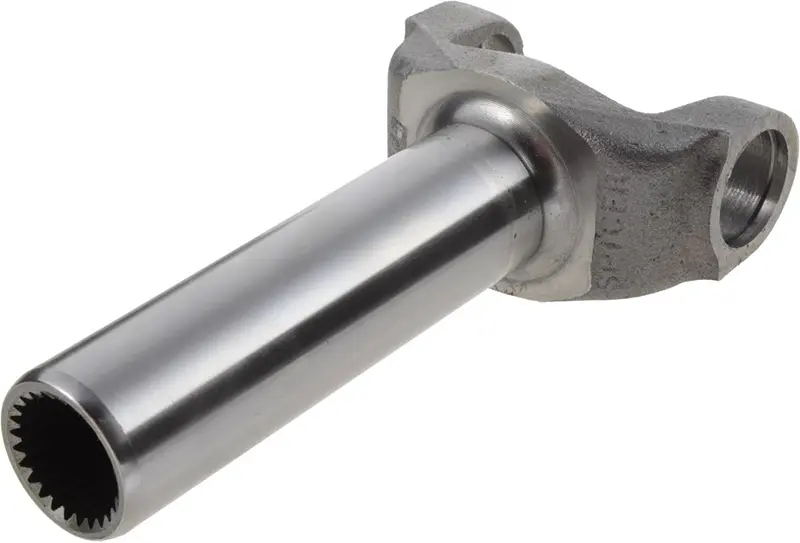
Know What a Slip Yoke Actually Does
The slip yoke lives at the transmission end of the driveshaft. It has internal splines that engage the transmission output shaft, and it slides in and out as the suspension moves. That sliding action is the whole point. Without it, every bump in the road would place additional stress on the driveline and transmission.
But here’s what people miss: the slip yoke also seals the transmission. The smooth outer barrel, also known as the journal, rides inside the tail shaft seal. If that surface is grooved or worn, a brand-new seal may leak immediately. You’ll chase the leak, replace the seal twice, and still wonder why it won’t stop dripping.
The Three Numbers That Matter Most
Before you order anything, you need three key measurements. Not just a vehicle lookup. Not just a part number from a forum. Actual measurements from the part in front of you.
Spline count. Count every spline, including the missing ones. Some yokes have blind spots where a spline is intentionally omitted—if you’re counting the yoke itself, include those missing positions in the total count. If you’re counting the transmission output shaft, it will show the full spline count. Get this wrong and the yoke won’t slide on, or worse, it’ll slide on but fail to engage properly under load.
Journal diameter. Measure the outside diameter of the barrel section—the part that contacts the tail shaft seal and may also run inside a supporting bushing. This dimension determines whether the yoke will seal and fit properly. A yoke with the right spline count but the wrong journal diameter may fit the shaft but still cause fluid leakage or improper support.
Centerline-to-end length. Measure from the center of the U-joint bore to the end of the yoke. This affects how much spline engagement you get inside the transmission. Too short, and you may have insufficient engagement. Too long, and the yoke may bottom out on the output shaft when the suspension compresses, which can damage the transmission.
In addition to these three measurements, check the spline type, barrel length, U-joint width, and bearing cap diameter. Also confirm the counterbore and snap ring configuration, as these details can affect compatibility with the transmission and U-joint assembly.
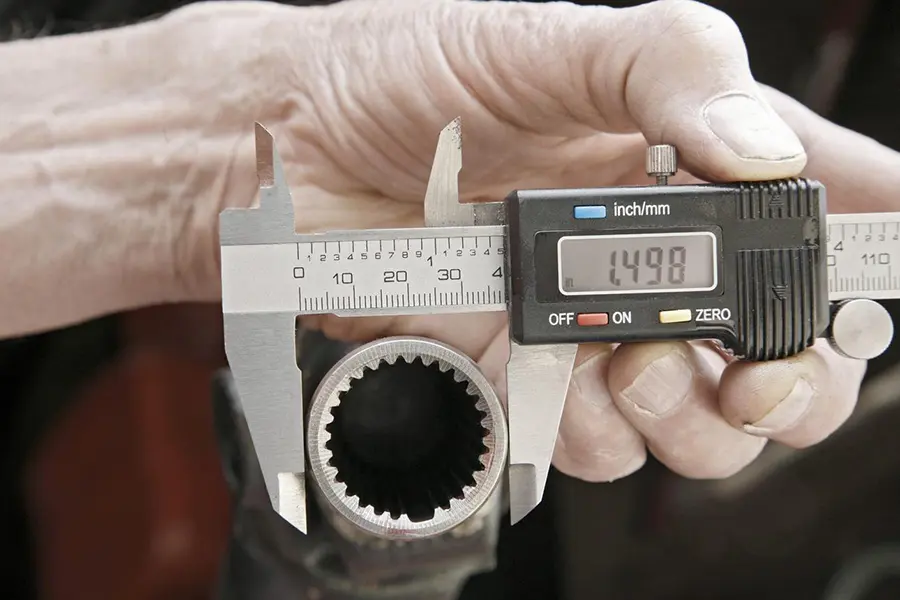
Spline Engagement: The Silent Killer
This is where a lot of DIY driveline builds go wrong. The slip yoke needs enough spline engagement inside the transmission to transmit torque without placing excessive stress on the output shaft. Some performance driveline applications recommend approximately three inches of spline engagement, with about an inch of available travel to accommodate suspension movement. However, these figures are not universal standards. The required engagement and operating travel depend on the transmission design, output shaft dimensions, and manufacturer specifications.
If you’re working with a shortened driveshaft or a transmission swap, check this carefully. A yoke that looks like it fits because it slides on and bolts up can still have insufficient engagement. It may run for a while, then cause spline wear, output shaft damage, or driveline failure under load.
The U-Joint Series Has to Match
The slip yoke’s U-joint bores have to accept the U-joint you’re running. If you’ve upgraded to a larger U-joint for more power, the stock slip yoke probably won’t work. Sonnax’s measurement guide lists U-joint width and cap diameter as critical dimensions for yoke selection. A 1310 series yoke won’t accept a 1350 U-joint without a compatible conversion or different yoke, even if the spline count looks similar.
Match the yoke to the U-joint, not the other way around. If you’re building a stronger driveline, the slip yoke is part of that upgrade, not an afterthought.
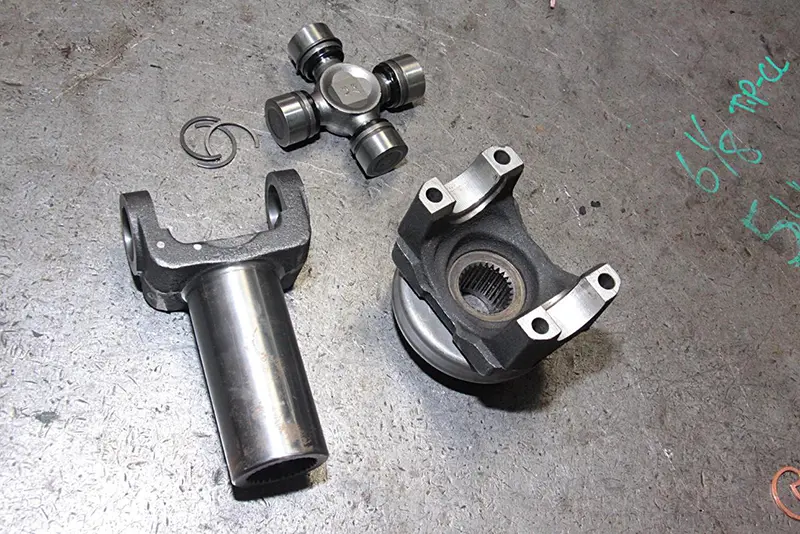
One More Thing: Replace the Seal
When you pull the old slip yoke out, some transmission fluid may drain from the tail housing, depending on the transmission design, fluid level, and vehicle position. That’s a good time to inspect the tail shaft seal and replace it if it shows signs of wear or leakage. The yoke has to come out to access it, and a worn seal can cause leakage even with a new yoke. Two parts, one job. Inspect both before putting everything back together, and check the transmission fluid level afterward.
The Bottom Line
A slip yoke isn’t a “close enough” part. Spline count, journal diameter, length, and U-joint series all have to line up. Measure the old one before you order the new one. Count the missing splines. Check the seal surface for wear. And if the seal shows signs of wear, replace it along with the yoke.
If you’re sourcing a replacement slip yoke and want to confirm fitment before you commit, send us the measurements—spline count, journal diameter, centerline-to-end length, and U-joint series. Hangzhou Speedway (HZSP) has been supplying driveline components for over 25 years, including slip yokes, splined yokes, and custom shaft assemblies built to drawing. HZSP: Precision-made driveshafts, built to spec—no guesswork. We’ll tell you what fits, and what won’t.