
5 Signs Your Midship Stub Shaft Needs Replacement
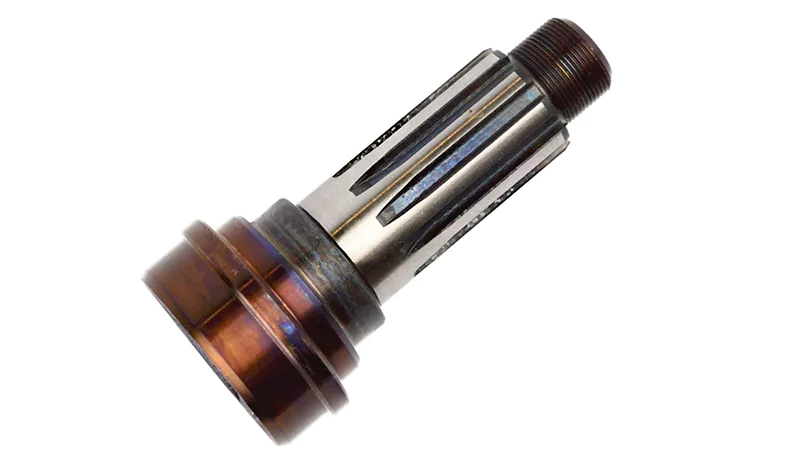
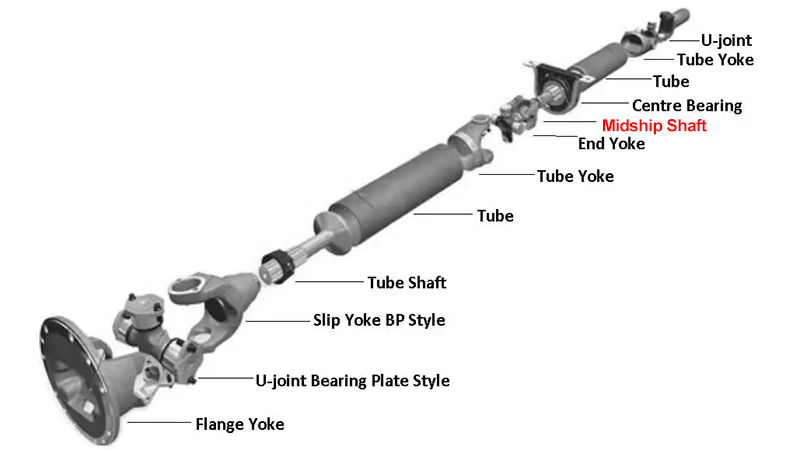
Any driveline system is only as good as its parts. Parts like U-joints and driveshafts frequently get the most attention, but the midship stub shaft is just as important in a smooth operating driveline. Utilized in many multi-piece driveshaft systems in trucks, in agricultural and industrial equipment, a midship stub shaft assists in driveline links and torque transmission.
Like any rotating part, a midship stub shaft will wear over time. Ignoring warning signs will result in vibration problems, driveline damages and costly downtime. Here are five warning signs that your midship stub shaft may need to be replaced.
1. Excessive Driveline Vibration
One of the first and most obvious symptoms of a worn midship stub shaft is excessive vibration.
If you start feeling uncomfortable vibration through the vehicle, chassis or equipment frame, especially when the vehicle is operating at higher speeds, then the stub shaft might be worn or misaligned. Damaged splines, worn bearing areas and even shaft shaft distortion can result in driveline imbalance.
Many operators immediately suspect the U-joints or driveshaft itself, but often forget to inspect the midship stub shaft. If vibration levels get worse with time and the cause is not obviously apparent, worth looking at the whole driveline assembly including stub shaft.
2. Visible Spline Wear
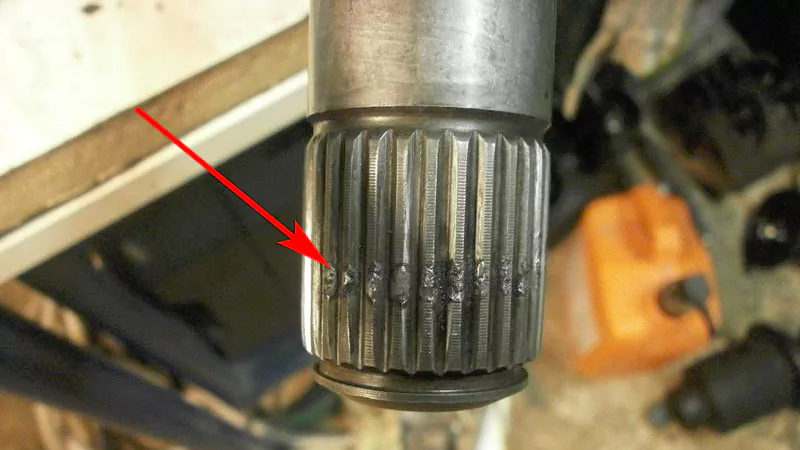
The spline section is one of the most critical areas of a midship stub shaft.
Over thousands of operating hours, repeated torque loads can gradually wear down spline teeth. Excessive wear may create additional clearance between mating components, resulting in looseness and poor power transmission.
Signs of spline wear include:
- Rounded spline edges
- Uneven tooth profiles
- Rust or metal dust around spline connections
- Excessive rotational play
If spline damage is severe, replacing the shaft is usually more cost-effective than attempting repairs.
3. Unusual Noise During Operation
A healthy driveline should operate relatively smoothly and quietly. When a midship stub shaft begins to fail, unusual noises often appear before complete failure occurs.
Common sounds include:
- Clunking during acceleration
- Knocking under load
- Metallic clicking noises
- Intermittent grinding sounds
These noises may occur because worn splines allow movement between connected components. Shock loads become larger and are audible throughout the driveline as clearance increases.
If unusual noises appear in conjunction with vibration, a thorough inspection must be completed as soon as possible.
4. Bearing Damage or Misalignment
Many midship stub shafts operate in conjunction with center support bearings. When the shaft becomes bent, worn, or improperly aligned, additional stress is placed on the bearing assembly.
Symptoms may include:
- Premature bearing failure
- Excessive bearing heat
- Damaged bearing seals
- Uneven bearing wear patterns
At times, technicians will replace the center bearing several times and still not know that the actual problem source is a worn stub shaft. Replacing only the bearing may solve the problem temporarily, but the source is frequently always there.
Checking shaft straightness and spline condition can help identify the root cause.
5. Visible Cracks, Corrosion, or Physical Damage
Physical inspection remains one of the most effective ways to identify driveline problems.
During routine maintenance, inspect the midship stub shaft for:
- Surface cracks
- Deep corrosion
- Impact damage
- Excessive rust
- Bent sections
Equipment in both the agricultural and off-road world runs in harsh environments: dirt, moisture and debris lead to increased component deterioration. Even small cracks in a component can grow with each repeat drive torque load and eventually cause the shaft to fail.
Any shaft with structural damage should be replaced immediately to avoid more extensive repairs to a driveline.
How to Prevent Premature Stub Shaft Failure
While wear is inevitable, proper maintenance can significantly extend service life.
Some best practices include:
- Perform regular driveline inspections
- Check spline connections for wear
- Maintain proper lubrication where applicable
- Inspect center support bearings periodically
- Correct driveline misalignment promptly
- Replace damaged components before failure occurs
Preventive maintenance is often far less expensive than dealing with unexpected equipment downtime.
Final Thoughts
A failing midship stub shaft rarely stops working without warning. In all cases, symptoms such as vibration, strange noise, spline wear, bearing problems and visible damage are already present long before failure becomes a complete (rear end) breakdown.
If one can recognise those symptoms early and correct the causes of issues, operators can improve the driveline reliability, reduce costs of driveline repairs and downtime of machine time.
If your driveline has any of the symptoms mentioned above, there’s a good reason to inspect the midship stub shaft as part of your driveline troubleshooting.