
Understanding U-Joints: Types & Uses Explained
Have you ever wondered how an engine powers the rear axle while your vehicle bounces over speed bumps? According to mechanics, a rigid metal shaft would snap instantly without rotational flexibility. That is where the universal joint steps in. Relying on the Cardan joint working principle, it uses U-shaped brackets called yokes to act as a flexible elbow, ensuring proper drive shaft phasing and alignment despite constant suspension movement.
Inside the Pivot: How Spiders, Yokes, and Needle Bearings Keep You Moving
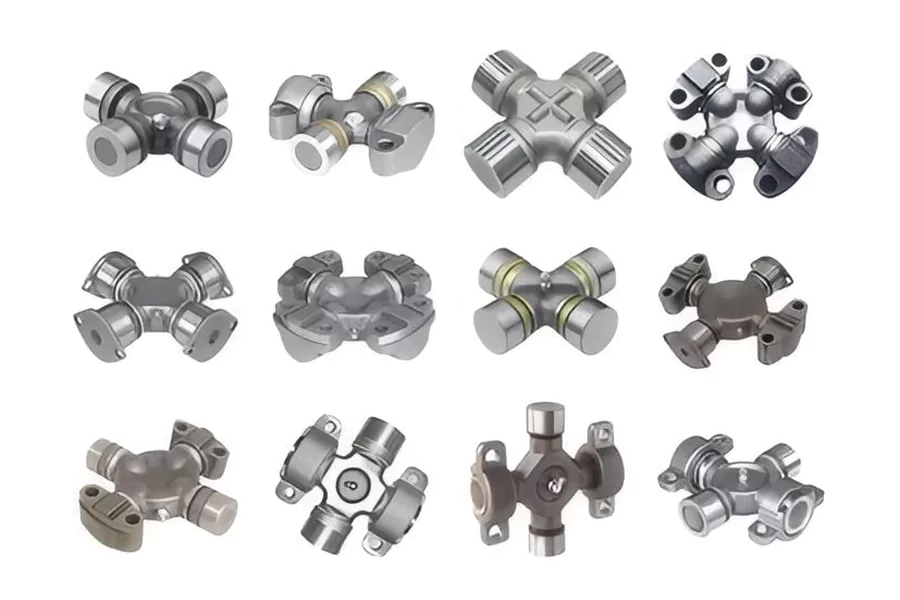
Picture the actual metal parts making this flexible elbow work. Two U-shaped “yokes” connect via a cross-shaped spider. The spider’s four ends, called trunnions, don’t just rub against the yokes. Instead, they pivot inside caps packed with tiny metal rollers, creating the smooth connection required for everything from daily drivers to heavy-duty u-joint applications.
Because these tiny rollers bear the engine’s twisting force, needle bearing wear patterns eventually develop over time. When those rollers grind into dust, the spider clatters loosely inside the caps. If you ever wonder why universal joints vibrate beneath your seat, this microscopic empty space from destroyed bearings is usually the culprit.
Operating at steep angles creates a different mechanical stress, forcing the driveshaft to pulse, speeding up and slowing down during each rotation. These universal joint angular velocity fluctuations can violently shake your vehicle. Preventing this destruction involves proper lubrication, making the choice between greaseable and sealed joints a critical maintenance decision.
Greaseable vs. Sealed: Choosing Your Maintenance Style and Avoiding "The Clunk"
When replacing a worn-out component, you’ll face a choice: greaseable vs non-greaseable joints. Sealed units are entirely maintenance-free, packed with factory lubricant for ultimate convenience. Conversely, heavy-duty drivers prefer versions with a built-in grease fitting. Meeting these ongoing lubrication requirements for universal joints lets you manually flush out harmful dirt and water with fresh grease, significantly maximizing the part’s lifespan.
Ignoring dry, rusting bearings is one of the common causes of u-joint snap, a scary failure that can physically drop your driveshaft right onto the pavement. Long before that happens, your vehicle will warn you with these symptoms of a failing u-joint:
A rhythmic chirping sound as you slowly drive.
Loud, metallic clunking during gear shifts.
Intense seat-vibration that worsens at highway speeds.
This angular limitation naturally highlights the u-joint vs cv joint pros and cons. While U-joints provide cheap, rugged durability for rear-wheel-drive trucks, Constant Velocity (CV) joints offer the extreme flexibility required for front-wheel-drive steering, albeit at a much higher replacement cost. Knowing your exact setup ensures you can effectively diagnose and maintain your drivetrain.
Your 3-Step Plan for a Vibration-Free Drivetrain
You now understand these flexible elbows well enough to diagnose clunks.
Start by safely shaking your parked vehicle’s driveshaft to check for loose play. When replacing parts, learning how to measure u-joint size is crucial for choosing the right u-joint series. Finally, always mark your yokes before u-joint installation to maintain correct drive shaft phasing and alignment, guaranteeing a smooth, vibration-free ride every time you hit the road.
At HZSP, we specialize in manufacturing high-quality universal joints and drivetrain components designed for durability and precision. Whether you need standard replacements or customized solutions for specific applications, our team ensures consistent performance and reliable supply to support your business.