
How to Match a Flange Yoke with a Universal Joint or Drive Shaft
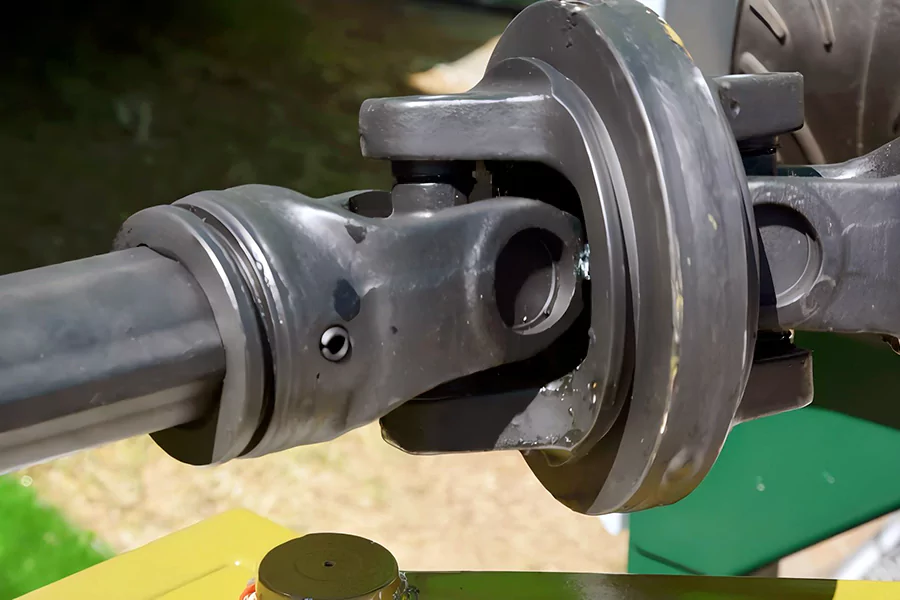
Matching a driveshaft’s flange yoke to the correct universal joint (U-joint) series is essential for a proper fit and reliable power transfer. U-joints are classified into series such as 1310, 1330, and 1350 based on bearing cap diameter and overall width. To identify the correct series, measure the U-joint’s cap diameter and the end-to-end width, then compare those values to standard driveshaft series charts. This guide walks aftermarket and OEM parts buyers through the full measurement and matching process, and explains installation best practices.
Before You Begin
Identify the yoke type
Confirm whether you are working with a flange yoke (flat or round flange) or another driveshaft yoke. Flange yokes usually have a bolt pattern and a pilot hole. Measurement procedures are similar across yoke types, but record the exact yoke style before you start.
Tools needed
Use a tape measure for rough checks and a caliper or micrometer for precise measurement. Because the differences between U-joint series can be small, accurate measuring tools are crucial to ensure u-joint compatibility.
Step 1: Measure the Yoke
Lug spacing (yoke width)
Measure from the outside edge of one yoke ear (lug) to the outside edge of the opposite ear. This span across the yoke determines how the U-joint will seat.
U-joint overall width (cap-to-cap)
Measure the distance from the outside of one bearing cap to the outside of the opposite bearing cap while the caps are positioned as they would be in the yoke. This “cap-to-cap” width is a primary identifier of the U-joint series.
Bearing cap diameter
Measure the diameter of one bearing cap. For typical light-duty series: 1310 and 1330 usually use around a 1.062-inch cap; 1350 series use a larger ~1.188-inch cap. Record all measurements precisely.
Step 2: Match the Series
Compare dimensions to a series chart
Use your measurements to look up the matching driveshaft or u-joint series (1310, 1330, 1350, etc.). Example reference points (typical ranges):
1310 — ~1.062″ cap, ~3.219″ width
1330 — ~1.062″ cap, ~3.625″ width
1350 — ~1.188″ cap, ~3.625″ width
Always ensure both sides of the driveline use compatible flange yokes and u-joints for safety and performance.
When you need a conversion u-joint
If the transmission-side yoke and differential-side yoke are different sizes, use a conversion u-joint (also called a combination u-joint). These have mixed cap sizes (for example, 1310 on one side a
Step 3: Identify the Correct U-Joint Part
Use sizing tools if available
If unsure, many manufacturers provide measuring templates or simple rulers to confirm series by matching the yoke to printed gauges. These tools reduce measurement errors.
Cross-reference catalogs
Once the series is confirmed, consult u-joint and driveshaft catalogs to find the exact part number. Pay attention to: greaseable vs. non-greaseable types, snap-ring types (internal or external), and whether the joint is serviceable.
Step 4: Connect the Driveshaft
Align the flanges
Position the driveshaft so the flange yoke and the u-joint flanges align squarely. Proper alignment prevents uneven loading and premature wear.
Use correct hardware
Secure the u-joint to the flange with the proper straps, U-bolts, or flange bolts. Tighten bolts evenly and to the manufacturer’s specified torque to avoid distorting the yoke.
Ensure snap rings / C-clips are fully seated
Many u-joints use snap rings (C-clips) to retain bearing caps. Make sure these are fully inserted into the yoke grooves. Fully seated snap rings prevent side-to-side play and ensure the joint remains secure under load.
Final check
After assembly, rotate the driveshaft by hand through its full range of motion. Check for smooth movement, no binding, and no excessive play. Re-check bolt torque after a short road test.
Troubleshooting & Practical Tips
- If measurements are close but not exact: Prefer the larger series only if the flange/yoke design supports it and there is no interference. Otherwise, use a conversion u-joint or consult the component manufacturer.
Grease access: Choose greaseable u-joints when regular maintenance is expected. Non-greaseable (sealed) joints are common in sealed-for-life applications.
Material & finish: For corrosive or heavy-duty environments, consider u-joints and flange yokes with protective coatings or higher-grade materials.
When in doubt, ask for a drawing: If you’re sourcing parts for OEM or aftermarket production, request engineering drawings or a sample to confirm fit before bulk purchase.
About HZSP
Correctly matching a flange yoke with the right u-joint and driveshaft series is vital for durability, safety, and minimizing downtime. Accurate measurement, proper series identification, and careful installation prevent vibration, premature wear, and potential driveline failure.
As a reliable partner for parts buyers, HZSP supplies flange yokes, u-joints, and driveshaft assemblies tailored for aftermarket and OEM needs. We offer technical support to help you choose the right driveshaft series and, when required, recommend conversion u-joints or custom solutions to ensure fit and performance. Contact HZSP for application-specific advice, part verification, and sourcing support.