
Understanding Your Vehicle’s Driveshaft: Backbone of Motion
Ever wonder what happens beneath your feet when you step on the gas? That satisfying surge forward isn’t just about horsepower—it’s your driveshaft (or drive shaft) doing the heavy lifting. Consider this forged steel lifeline your vehicle’s kinetic courier – the driveshaft that seizes engine torque and channels it to your axles with unwavering precision. From nimble hatchbacks to rugged trucks, this rotating envoy bridges your powertrain and pavement, translating combustion energy into forward motion through constant velocity joints and splined linkages. More than just a spinning tube, it’s the dynamic arbitrator between your accelerator input and asphalt conquest, engineered to flex with suspension travel while maintaining rotational integrity. Without this torque-transmitting backbone converting piston fury into wheel revolution, your ride would remain an expensive driveway ornament.
We’ll break down how it operates, explore its variations, and share easy maintenance tricks to keep your driveshaft—and your drives—running like clockwork.
The Driveshaft Demystified
You might be surprised to learn your car has its own version of a power grid. The driveshaft serves as the main transmission line, shuttling energy between three key stations: the roaring engine up front, the gear-shifting transmission, and those spinning wheels down below. Crafted from tough-as-nails steel or featherlight aluminum (depending on your ride), this hollow maestro conducts rotational forces like a symphony conductor—transforming engine buzz into wheel spin with precision.
Here’s the kicker: That “vroom” you feel when accelerating? That’s essentially your driveshaft shouting “Message received!” to the wheels. It takes the engine’s raw rotational energy—what gearheads call torque—and literally puts it into motion. Whether you’re backing out of a parking spot or merging onto the highway, this component’s working overtime to translate mechanical chatter into physical action.
How Driveshafts Make Motion Possible
Here’s the step-by-step magic:
- Your engine generates rotational power.
- This energy travels through the transmission.
- The driveshaft picks up the baton, delivering torque to the wheels.
The configuration of your drivetrain decides where the power goes. Rear-wheel-drive (RWD) vehicles send most power to the back wheels through a single driveshaft, while 4WD systems split energy between all four wheels using specialized setups. Ever wonder why AWD cars handle so smoothly on slippery roads? Their driveshafts play a starring role in that traction.
Common Driveshaft Designs
Not all driveshafts are created equal. Manufacturers tailor them to a vehicle’s size, purpose, and drivetrain:
Single-Piece Driveshaft
Perfect for compact cars and short-wheelbase trucks, this straightforward design uses one solid tube linking the transmission to the differential. It’s lightweight and efficient but struggles in longer vehicles where flexibility matters.
Slip-Yoke Driveshaft
Off-road enthusiasts know this one well. Its sliding mechanism adjusts length as suspension moves, making it ideal for trucks with heavy-duty leaf springs or vehicles tackling uneven terrain.
Two-Piece Driveshaft
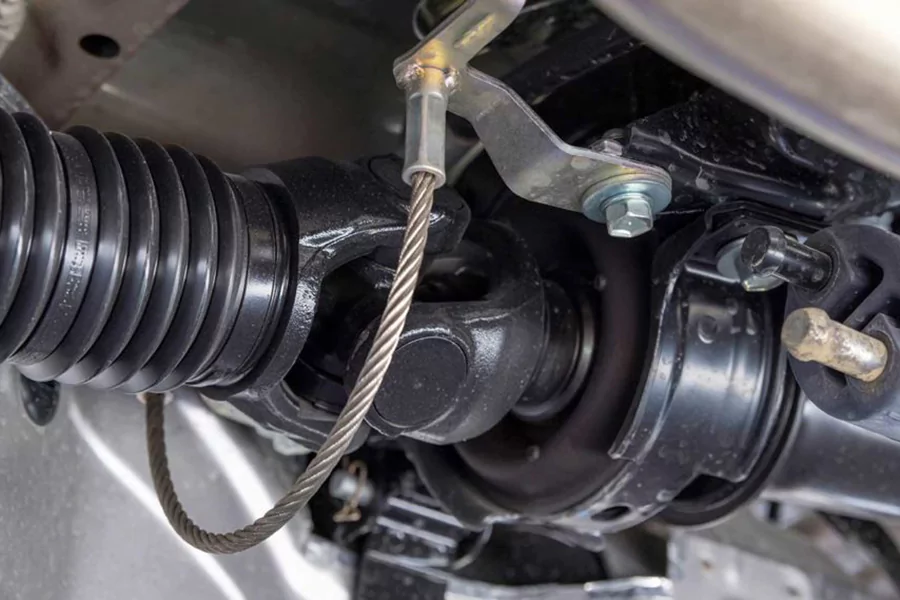
Long sedans and extended-cab trucks often use this split design. By adding a center bearing, it reduces vibrations in lengthy wheelbases while handling suspension shifts gracefully.
CV Driveshaft
Front-wheel-drive and AWD cars rely on constant velocity (CV) shafts. With flexible joints at both ends, they maintain smooth power delivery even during sharp turns or bumpy rides—no jerky movements here.
Keeping Your Driveshaft Healthy
Like any hardworking part, driveshafts need care. Watch for:
- Vibrations at certain speeds (could indicate imbalance)
- Clunking noises during gear changes (worn universal joints)
- Rust or damage from road debris
Regular inspections and timely lubrication of U-joints or CV joints can add years to its lifespan. Pro tip: After off-roading or driving through deep water, always check for debris stuck around the driveshaft.
Final Thoughts
Whether you’re cruising in a compact sedan or conquering trails in a 4×4, the driveshaft quietly ensures power goes where it’s needed. Understanding its role helps you spot issues early and appreciate the engineering that keeps your wheels turning. Next time you accelerate, remember—there’s a lot more than just an engine making it happen!