
Complete Fitment Guide: Match Center Support Bearing to Vehicle Model
When it comes to replacing a center support bearing, knowing the vehicle model is only the starting point. It sounds simple enough—find the year, make, and model, order the bearing, and get the job done. In practice, though, center support bearing fitment can be a little more complicated.
Why? Because the same vehicle model may use different driveline configurations, engine options, wheelbases, or driveshaft assemblies. And a bearing that looks almost identical to another one may still have the wrong inner diameter, mounting bracket, or rubber support.
So, before you place an order, it pays to check the fitment properly.
What Is a Center Support Bearing?
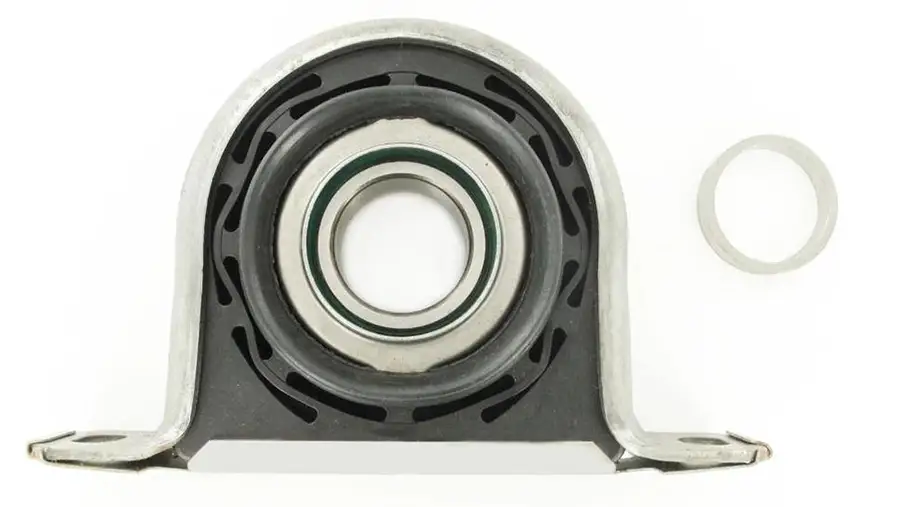
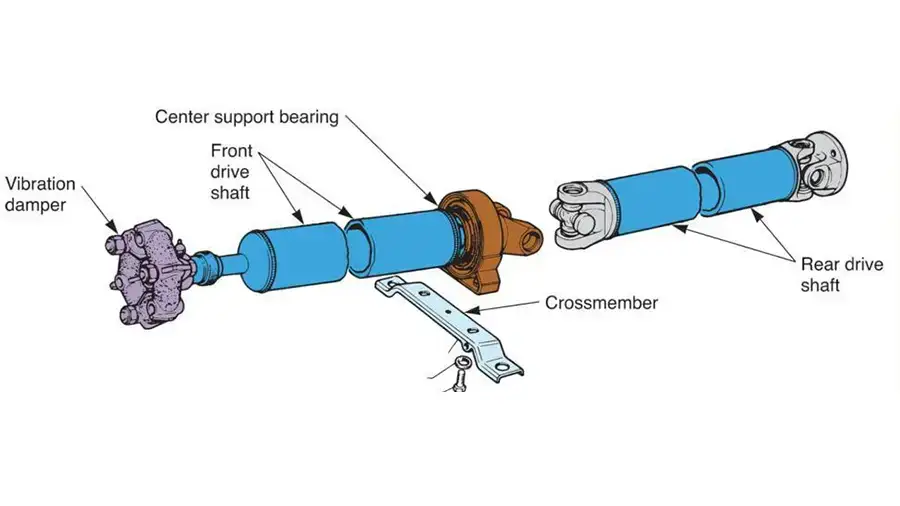
A center support bearing, also called a carrier bearing, is used on vehicles with a two-piece driveshaft. Its purpose is to support the driveshaft at the center and help to keep the rotating driveshaft in proper alignment.
The center support bearing is a relatively small part but one that works all the time. The driveshaft spins at high speed while the bearing and rubber support are subjected to vibration, road shock, torque changes, and driveline movement.
Once the bearing starts to go out, a driver will hear a couple of typical symptoms:
- A humming or whining noise that increases in speed as vehicle speed increases
- Vibration through the floor or seat
- Clunking when accelerating or changing from drive to reverse
- Excessive driveshaft movement
- A noticeable shudder under load
These symptoms can point to other driveline problems as well, so proper inspection is important before replacing the bearing.
Why Vehicle Model Alone Is Not Enough
Here is where many fitment mistakes happen.
A vehicle catalog might list something like “2015–2019 Pickup Truck,” but that does not automatically mean one center support bearing fits every version of that truck.
Different configurations can use different driveshaft dimensions. For example, a longer wheelbase may require a different two-piece driveshaft assembly. Engine and transmission combinations can also affect the driveline design.
Even within the same model year, you may need to check:
- Engine size and configuration
- Transmission type
- 2WD or 4WD/AWD
- Wheelbase
- Driveshaft type
- Driveshaft tube diameter
- Bearing inner diameter
- Mounting bracket design
That is why a good fitment check should go beyond the vehicle’s name.
How to Match a Center Support Bearing to Your Vehicle
1. Start With Year, Make, and Model
This is your first filter.
Enter the exact vehicle year, manufacturer, and model into a reliable parts catalog. If the catalog provides submodels or trim levels, don’t skip them. They can help narrow down the correct application.
2. Check the Drivetrain
Next, confirm whether the vehicle is rear-wheel drive, four-wheel drive, or all-wheel drive.
For center support bearings, drivetrain configuration matters because the driveshaft arrangement can be different. A bearing designed for one shaft assembly may not work with another, even if both vehicles share the same body style.
3. Compare Physical Dimensions
This is the step worth slowing down for.
Check the bearing’s inside diameter (ID), outside dimensions, overall width, and mounting configuration. If the original part is available, measuring it can provide an extra layer of confirmation.
Pay particular attention to the bearing ID. If it is too small, installation is obviously impossible. If it is too large, the bearing may not properly grip or support the driveshaft.
4. Match the Mounting Bracket
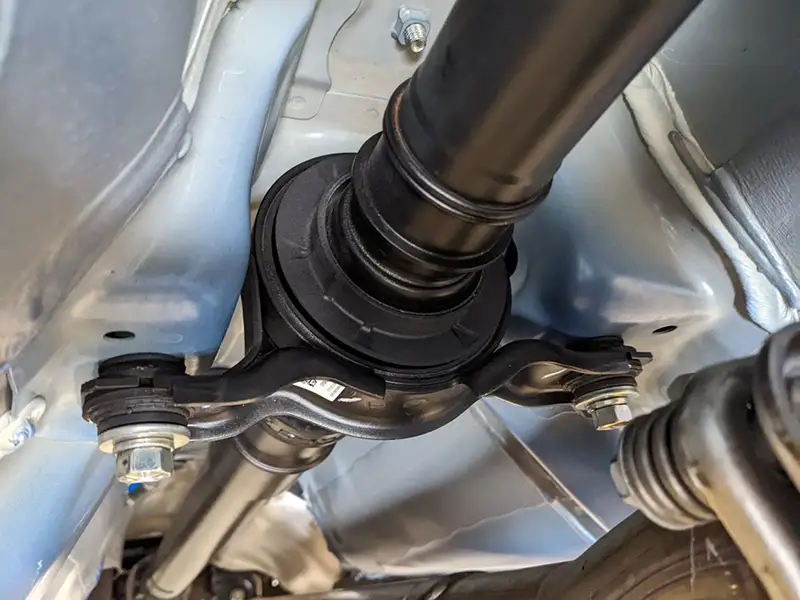
The rubber support and metal bracket are just as important as the bearing itself.
Look at the bolt-hole arrangement, bracket shape, offset, and overall construction. Two bearings may have similar-looking rubber supports but completely different mounting patterns.
Don’t judge fitment by appearance alone. That’s an easy trap.
5. Cross-Check the OE or Part Number
Before buying a center support bearing, make sure you can answer these questions:
Vehicle: What year, make, and model is it?
Drivetrain: 2WD, 4WD, or AWD?
Powertrain: Which engine and transmission are installed?
Driveshaft: Is it a two-piece shaft, and what are its dimensions?
Bearing: What are the ID, dimensions, and mounting specifications?
Part number: Does the replacement cross-reference with the OE number?
If all of these line up, you are much less likely to end up with a part that looks right in the box but doesn’t fit the vehicle.
The Bottom Line
Choosing the correct center support bearing is not just a matter of matching a vehicle model to a product listing. Fitment depends on the complete driveline configuration.
Year, make, model, drivetrain, engine, transmission, driveshaft dimensions, mounting design, and OEM part numbers all have a role to play.
And honestly, spending a few minutes more checking all that information is better than finding out about the mismatch after a vehicle is already on the lift.
For distributors, repair shops, and DIY vehicle owners, all fitment checks mean fewer returns, less installation downtime, and a much better chance of making a driveline repair a success the first time.