
Driveshaft Anatomy: Parts, Materials, and Function
Every time you press the gas pedal, your engine generates power. But how does that raw rotational force reach the wheels to push you down the road? The answer lies under your vehicle in a rapidly spinning metal tube known as the driveline. Understanding Driveshaft Anatomy: Parts, Materials, and Function is crucial for automotive enthusiasts, DIY mechanics, and anyone looking to maintain or upgrade their vehicle’s powertrain.
Let’s take a deep dive into the engineering that connects your transmission to your wheels, exploring everything from raw materials to common symptoms of failure.
Decoding the Core Components
To grasp how rotational energy travels flawlessly from the gearbox to the rear axle, we have to look closely at the individual parts that make up a driveshaft assembly.
The Yokes and Joints
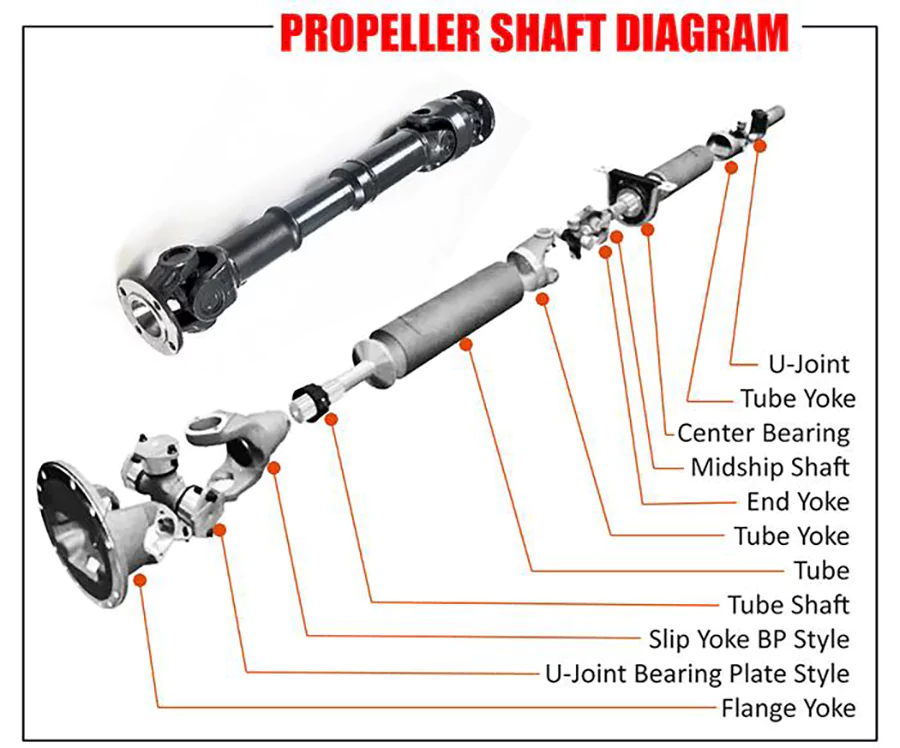
The ends of the driveshaft are just as important as the tube itself. At the front of a traditional layout, the slip yoke function in vehicle suspension is vital. Because the rear axle moves up and down over bumps, the distance between the transmission and the axle constantly changes. The slip yoke slides in and out of the transmission tailshaft, accommodating this shift in length seamlessly.
As power moves down the line, it encounters the universal joints (U-joints). Proper universal joint operation in rear-wheel drive systems allows the driveshaft to pivot and deliver power at an angle. However, U-joints create slight fluctuations in rotational speed as they spin at an angle. To cancel out these vibrations, engineers rely on perfectly phased universal joints and driveline angles. If the yokes on each end of the shaft aren’t properly aligned (phased), the driveline will essentially fight itself, leading to severe shuddering.
At the very back, the assembly meets the rear axle via a securely bolted flange yoke connection to differential input. This rigid mounting point ensures that all that twisting force is transferred directly into the differential gears.
Advanced Power Delivery: CV Joints
While U-joints are standard in most trucks and classic rear-wheel-drive setups, modern engineering sometimes demands a different approach. For vehicles with independent suspensions or steeper driveline angles, torque transmission through constant velocity joints (CV joints) is highly preferred. Unlike U-joints, CV joints transfer power at a perfectly constant speed regardless of the operating angle, virtually eliminating the vibrations associated with extreme angles.
Choosing the Right Configuration
Vehicle length and intended use dictate how a driveshaft is configured. When evaluating single piece vs two piece driveshaft pros and cons, it usually comes down to how long the shaft is and how fast it needs to spin without getting unstable.
Single-Piece Driveshafts: Fewer parts, fewer joints, and usually less to maintain. On shorter wheelbase vehicles it’s a clean, efficient setup. The downside is length: make the tube too long and it can start to “jump rope” at higher RPM, which is why long trucks rarely run a one-piece shaft.
Two-Piece Driveshafts: Common on longer trucks and vans. Splitting the distance into two shorter sections raises the critical speed and keeps the tubes from flexing. The tradeoff is that you add another joint and a center support bearing. That bearing bolts to the frame and holds the middle of the driveline up, so the shaft stays aligned while it spins.
Driveshaft Materials: Steel, Aluminum, and Beyond
Material choice shows up in places you can feel: throttle response, how the vehicle behaves at speed, and how well the shaft survives real-world abuse. Mild steel is common on daily drivers because it’s cheap and tough, but it’s not the only option.
Chromoly Steel: This is the “I don’t want it to twist” option. Drag cars, rock crawlers, and anything that hits the driveline with sudden torque tend to use chromoly because it’s stronger for a given size than mild steel. It’s not magic—you still need proper angles and balance—but it buys you margin when the launch is violent or the tires hook hard.
Aluminum vs. Carbon Fiber: For track cars and modern sports cars, shedding rotational weight is just as important as strength. When comparing carbon fiber vs aluminum driveshaft benefits, aluminum offers a fantastic, cost-effective upgrade that reduces weight and improves throttle response. However, carbon fiber is the undisputed king. Not only is it incredibly light, but it also has a higher critical speed threshold and naturally dampens vibrations. The rise of composite materials in modern automotive powertrain design proves that carbon fiber is the ultimate choice for high-end automotive engineering.
Customization, Geometry, and Balancing
If you are lifting a 4×4 or swapping an engine into a project car, factory components will no longer fit. You must know exactly how to measure driveshaft length for custom builds.
Actionable Tip: To measure for a custom shaft, keep the vehicle resting at its normal ride height (suspension loaded). Measure the distance from the very edge of the transmission tail housing seal to the flat face of the differential yoke. Provide this exact “seal-to-flange” measurement to your driveline shop.
Once built, the unit must be perfectly balanced. The dynamic balancing process for automotive driveshafts involves spinning the fully assembled unit on a highly sensitive balancing machine. Technicians spot-weld tiny steel weights onto the tube to counteract any heavy spots. Skipping this step guarantees a rough, vibrating ride.
Recognizing the Warning Signs of Failure
Nothing in the driveline lasts forever. The good news is that a lot of driveshaft problems give you a heads-up if you’re paying attention.
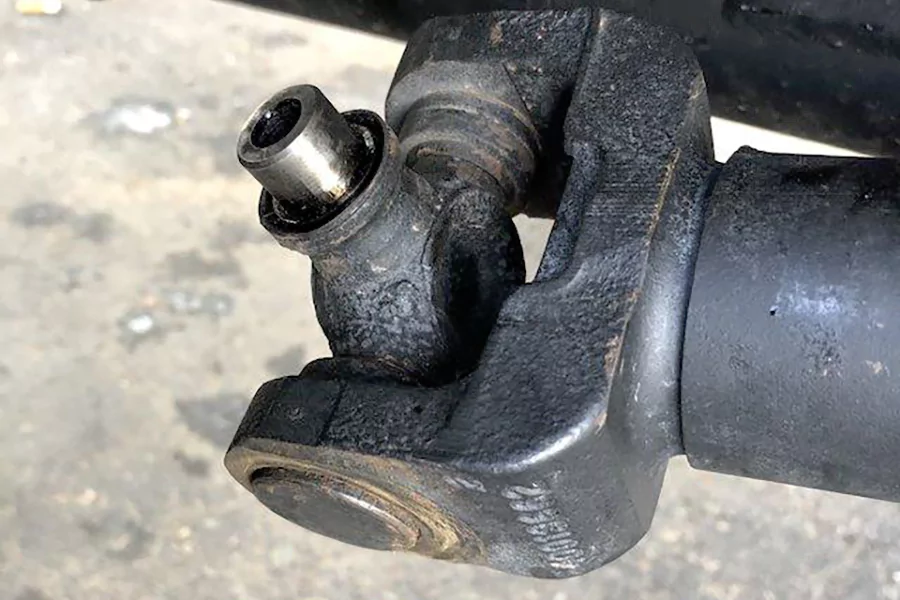
Noises when the load changes: The classic U-joint noise shows up during transitions: shifting from Reverse to Drive, letting off the gas, then getting back into it. It’s usually one solid clunk—like the slack got taken up all at once. A dry joint can also chirp or squeak at parking-lot speeds, especially after rain or a wash.
Vibration that lives in the seat: If the shake feels like it’s coming from the floor or seat, don’t rule out the driveshaft. A worn joint is common, but so is a tube that’s been dented, a weight that’s gone missing, or a shaft that’s carrying a lopsided load of mud/ice. The symptom often ramps up with speed because the shaft speed ramps up with speed.
Why you shouldn’t “wait and see”: If a U-joint comes apart, the shaft can drop and start hitting whatever is nearby—exhaust, floor, transmission tail housing. In a worst case it can catch the pavement. If you’re getting repeat clunks or a new highway shake, it’s worth putting eyes on it sooner rather than later.
The Bottom Line
Most of the time, a driveline issue isn’t mysterious. It’s geometry, balance, or wear. Once you know what the driveshaft is supposed to do—and what its parts look like when they’re healthy—you can make smarter calls on diagnosis, upgrades, and driveshaft repair. Keep the shaft straight, keep the joints happy, and keep the angles reasonable, and it will quietly do its job for a long time.