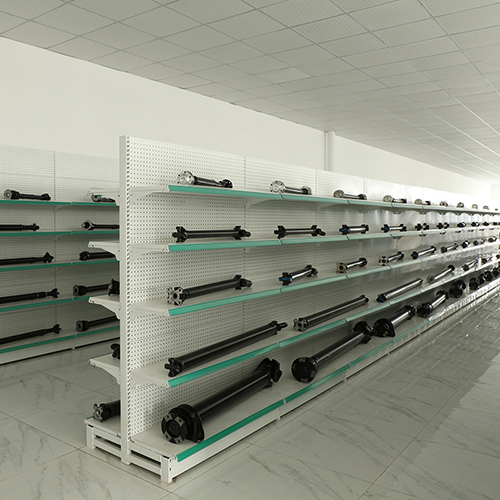
Driveshaft Specification Sheet: What Buyers Should Require
When purchasing a custom or replacement driveshaft in 2026, buyers must insist on a complete, test-backed specification sheet from their supplier. Below I expand your framework into a supplier-ready, SEO-friendly blog that embeds the most important driveshaft-related keywords (driveshaft, u-joint / universal joint, flange yoke, slip yoke, spline, critical speed, center support bearing, balancing, runout) and cites authoritative sources where appropriate.
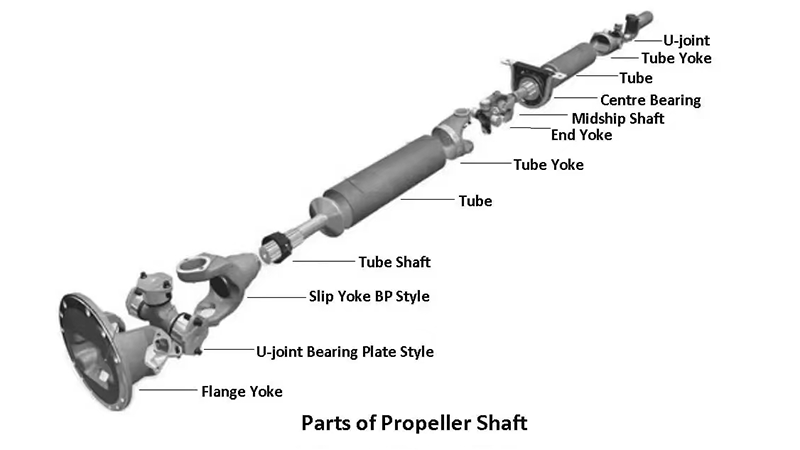
Table of Contents
Mechanical ratings & performance limits — what to demand and why
Torque capacity (continuous & peak)
Ask suppliers for both the continuous operating torque rating and the maximum peak (yield) torque. The selected U-joint/driveshaft series and tube construction must have published torque margins larger than the vehicle’s maximum operating torque to avoid permanent deformation or failure. Suppliers such as Dana publish application guidelines that explicitly require the chosen series’ torque capacity to equal or exceed the application torque.
Critical speed
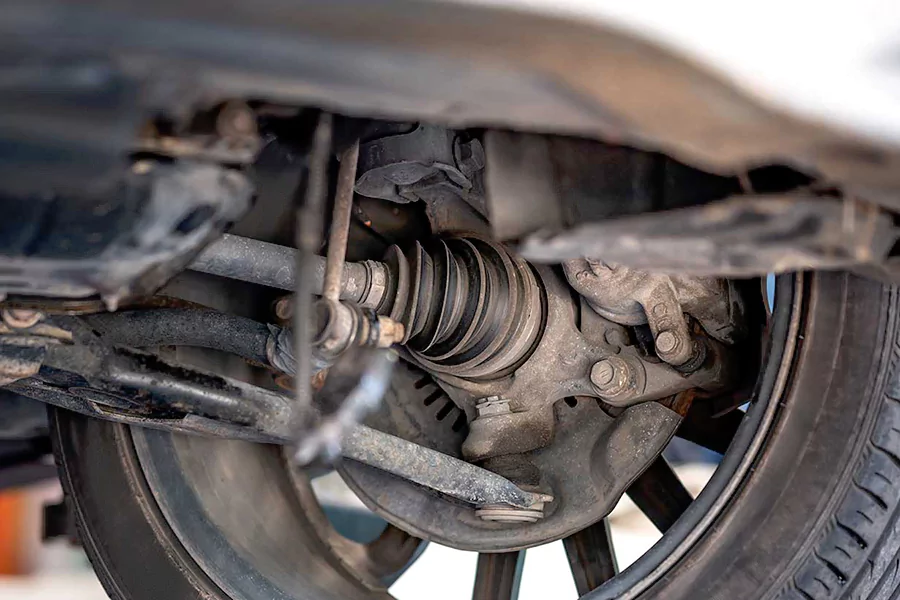
Critical (bending) speed is the RPM where the shaft will begin to resonate and “whip.” For safety and longevity, specify that the driveshaft’s operating RPM range be at least 15–20% below the calculated critical speed for the assembled shaft/tube configuration. Industry guidance and driveline tech references emphasise keeping operating speeds under this limit to avoid destructive vibration.
Operating angles (U-joint angles)
Require the supplier to list the maximum and normal working angles (in degrees) for the universal joints used. For long life and minimal wear, aim for nominal operating angles near or below 2° where practicable; document allowable peak angles for service conditions as well. (High operating angles accelerate wear and reduce U-joint life—see manufacturer application guidance.)
Shock / transient loads
If the vehicle sees frequent shock loads (towing, off-road, agricultural duty), request explicit design margins or transient torque ratings and any shock-load mitigation features (tuned slip-yokes, isolators, or coupling types).
Precise physical dimensions — make fitment fail-safe
Total installed length
Specify how length is measured (e.g., center-to-center of U-joints for slip driveshafts, or flange face-to-face for flanged driveshafts). A clear measurement convention prevents mismatched deliveries.
Tube/tubing details
Require: material (e.g., 6061 aluminum, 4130 chromoly, carbon fiber), outer diameter, wall thickness, heat-treatment or tempering, welding method, and ID/OD tolerances. Material choice affects critical speed, inertia and fatigue life.
Splines and mating features
List spline count, major/minor diameter, engagement length, and tolerance class. If the shaft must mate to a transmission or PTO spline, include the OEM drawing or the transmission part number.
Connector geometry
Specify flange face detail, bolt circle, bolt size, yoke types (full-round vs half-round), seal diameters, and any lubricant fittings (zerk) locations.
Component details — demand component traceability
Universal joint (U-joint) series & torque figures
Require the U-joint series (e.g., 1310, 1330, 1350, 1410) and their corresponding continuous and yield torque numbers. Higher series (1350 and above) are commonly specified for heavy vehicles and applications above ~500 hp. Public torque tables and manufacturer guides show clear differences between series—buyers should insist on the series and its published torque ratings.
Yoke type & finishing
State yoke type (flange yoke vs slip yoke vs welded yoke), material, weld procedure (if welded), and any corrosion finishes or coatings. For welded yokes, require the weld procedure and post-weld heat treatment where applicable.
Center support bearing / carrier
If the driveshaft is a multi-piece assembly, specify the center support bearing model, load rating, and mounting tolerance. Require supplier confirmation of compatibility with the vehicle subframe or carrier bracket.
Quality, testing & compliance — what reports to insist upon
Balance specification & report
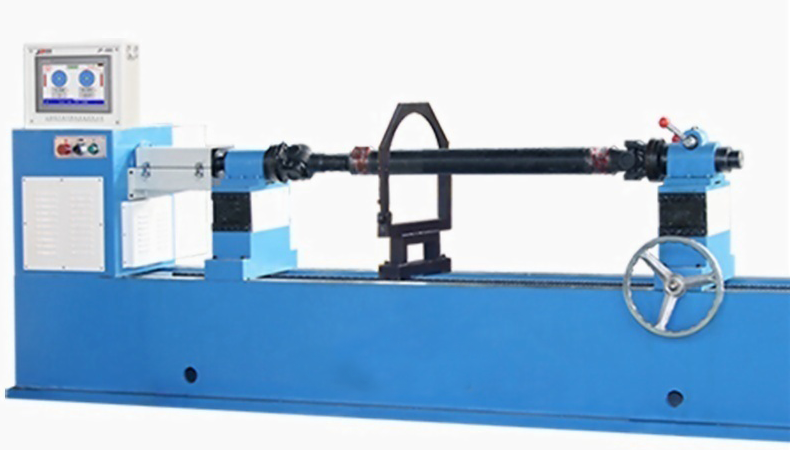
Ask for a dynamic balance report showing the final balance (expressed in ounce-inches or per an ISO balancing grade). Driveshafts are balanced to a numeric limit (ounce-inches) or to an ISO grade; include which standard was used. For very high RPM use, suppliers should provide balancing at operating speed and a certificate.
Runout & geometric tolerances
State allowable runout (Total Indicated Runout/TIR) and geometric tolerances. For high-RPM applications (above ~3,600 RPM) industry practice is to require runout tolerances around 0.001″ (1 mil) where precision demands are high; for lower-speed applications looser tolerances are typical. Include measurement method (TIR with dial indicator, fixturing) in the spec.
Material verification & NDT
Request material certificates (chemical composition and mechanical properties), and non-destructive test (NDT) reports—e.g., ultrasonic inspection (UT) for critical welds and magnetic particle inspection (MPI) where applicable. Dana and other OEM suppliers include NDT and material traceability in their driveshaft application documents.
Fatigue & life testing
Where duty cycles are severe, ask for fatigue testing protocols and results (cycles to failure at representative torque and angle). If the supplier has run component life (B10/B50) calculations for the selected U-joint series, include them.
Lubrication & maintenance instructions
The spec sheet should list the exact grease type (e.g., manufacturer part or “NLGI #2 EP lithium grease” or the supplier’s approved equivalent), fill points, relubrication interval and any special notes (e.g., “use synthetic Spicer-approved grease” for Spicer U-joints). Following manufacturer lubrication recommendations prevents premature failure and preserves warranty validity.
Supplier support, lead times & warranty
Warranty & return policy
Insist on a written warranty statement listing what is covered and for how long, and call-out exclusions (misuse, over-torque, racing). Require RMA/returns procedure and lead time for replacement.
Technical support & fitment assistance
Buyers should require a named technical contact, access to CAD/drawing reviews, and fit-check assistance (e.g., mock-up or trial fit support) to avoid rework.
Standard forms & templates
Use established manufacturer order/spec templates as a baseline: for example, Dana’s Driveshaft Customer Specification Form and QA1’s custom driveshaft order forms are practical templates that capture measurement, U-joint selection, material and balance requirements. These forms are effective starting points for custom or production orders.
Ready-to-use Driveshaft Specification Checklist
Below is a compact, supplier-fillable checklist you can attach to RFQs or purchase orders.
Project / Vehicle: _________________________
Contact / Technical rep: ___________________
Drive position (e.g., prop shaft #2, rear): ____
Shaft type: ☐ One-piece ☐ Two-piece ☐ Slip ☐ Flanged ☐ Carbon-fiber
Total length (measurement method): ___________
Tube material / OD / wall thickness / heat-treat: ___________
Spline: count / major dia / engagement length / tolerance: ___________
U-joint (series, part no.): ______________ (continuous torque / yield torque): ______.
Yoke type / flange spec / bolt circle: ___________
Critical speed calculation & operating speed margin (safety %): ___________.
Dynamic balance final result and method (oz-in or ISO grade): __________.
Maximum allowable runout (TIR): __________ (state measurement method).
Weld records / NDT reports attached: ☐ Yes ☐ No.
Material certificates attached: ☐ Yes ☐ No.
Lubricant type & relube interval (exact spec): __________________.
Warranty terms & technical support contact: __________________.
Lead time & serial numbering / traceability: __________________.
Additional testing requested (fatigue / modal / runout @ speed): __________.
Sample buyer notes
Driveshaft shall be balanced at operating speed and delivered with a dynamic balance certificate per ISO 1940/1 or equivalent.
Provide U-joint series and rated continuous and yield torque; supplier must confirm joint selection per application torque plus 30% safety margin.
Welds on yokes require UT inspection; material certificates must accompany shipment.
Final notes on procurement best practice
Use manufacturer templates as the starting point for RFQs—these forms are designed to capture critical driveshaft measurements and component choices up front.
Insist on test evidence (material certs, balance certificates, NDT) rather than verbal assurance.
Match U-joint series to duty (1350 and higher for heavy/higher-hp, per published torque tables).
Specify lubrication clearly—the correct grease (commonly NLGI #2 EP lithium or manufacturer-approved synthetic grease) and service interval should be part of the spec sheet.
About HZSP
If you need a supplier that understands these requirements end-to-end, HZSP specialises in custom and replacement driveshaft assemblies for automotive and light-commercial applications. HZSP provides detailed specification support, material traceability, dynamic balancing, and post-sale technical assistance to help buyers meet the type of specification standards described above. If helpful, HZSP can supply a completed driveshaft specification form for your review so you can attach it directly to RFQs.